GPT-6 models demonstrate intrinsic protein-design capabilities
GPT-6's protein design offers major R&D and market opportunities.
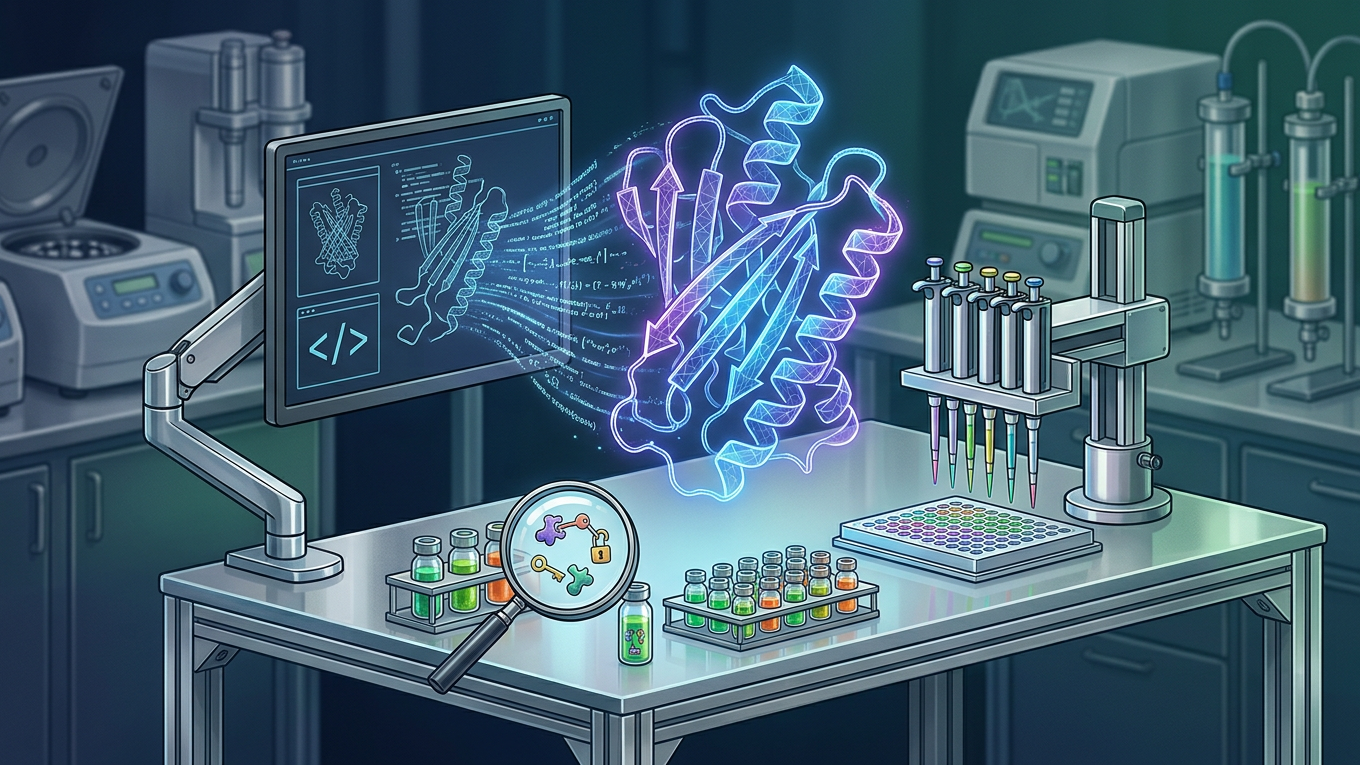
A general-purpose model designing novel proteins feels like a category error. We usually think of scientific discovery as the domain of highly specialized tools, each honed for one specific task. But a new paper and post from OpenAI claims its GPT-6 models can design new protein shapes and sequences “using only reasoning and code,” without first calling a specialized biology model.
If true, this changes the workflow for builders. It suggests a future where complex scientific design is less about mastering a chain of specific tools and more about prompting a single, powerful model.
An LLM as a research lead
According to OpenAI, the model doesn’t just have memorized biological facts. It supposedly draws on knowledge of math, physics, and chemistry to reason about protein structures and then writes and executes code to explore design possibilities.
In lab experiments with research partner Onava, this approach yielded tangible results. For five different targets, proteins based on GPT-6.2’s 3D designs showed evidence of binding. However, the workflow wasn’t a simple prompt-to-protein affair. After GPT-6.2 generated the 3D structure designs, OpenAI still used specialized models like SolubleMPNN to create the amino acid sequences and to help filter candidates for the lab.
This is a critical detail. The general-purpose model acted as the creative director, but specialist tools were still needed on the production line to turn the concept into a testable reality.
A new interface for biology
The lab results are a mixed bag, which is what you’d expect for early research. When designing entirely new “minibinders,” 35 out of 322 designs (10.9%) showed evidence of binding to their target. The hit rate was much higher when redesigning sequences for existing protein structures (up to 85%) or redesigning antibody binding loops (70%). The model seems more reliable at modifying known good designs than creating them from whole cloth.
The most interesting part for builders might be the new interaction model. Researchers could guide the design by specifying where a protein should attach, how many coils it should have, or which parts of a target molecule it should bury. This is a move toward programmable biology through a descriptive, prompt-based interface. The source even compares it to guiding image generation, which is a powerful analogy for how accessible this could become.
A clear weakness remains
This isn’t a solved problem. OpenAI is upfront that predicting a complete protein structure was a “clear weakness” for the models. The reliance on other models for sequencing and candidate selection also shows the specialized toolchain isn’t obsolete yet.
The key question is how quickly that gap will close. As general-purpose models absorb the capabilities of more specialized tools, we get closer to a “prompt-to-protein” pipeline. This opens up massive opportunities for R&D, but it also raises questions about verification. How do you build guardrails for a system that can generate novel, functional biological matter from a simple text description?
Source: GPT-6 models demonstrate intrinsic protein-design capabilities