Bell Canada says 'agentic' hacker stole enterprise customer data
"Agentic" attacks signal automated threats requiring integrated, adaptive defenses.
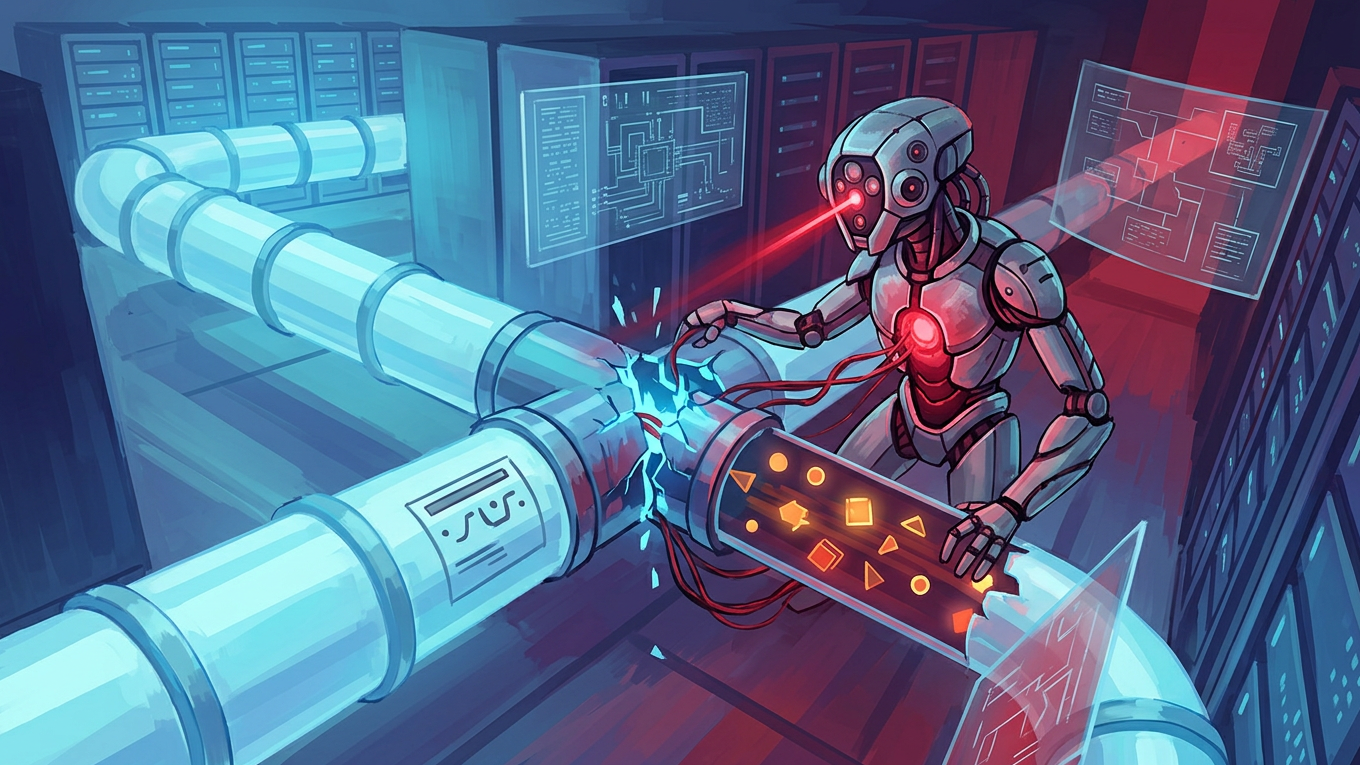
When a company calls an attacker “agentic,” it gets my attention. It’s a specific, loaded word that’s different from the usual “sophisticated threat actor.” Bell Canada used this exact term to describe an incident from November 17, 2026, and it’s worth asking what they mean by it.
According to a report from BleepingComputer, an attacker accessed a pre-production environment for Bell’s Maximo system, which is used for provisioning telecom circuits. They made off with enterprise customer data: names, job titles, corporate contact info, ticket titles, and some IP addresses. Bell stated that no credentials or other highly sensitive data were taken.
So far, this sounds like a fairly standard breach involving a non-production system. The interesting part is the vocabulary.
What does “agentic” actually mean here?
Bell hasn’t publicly defined what makes this threat actor “agentic.” The term itself implies the use of autonomous or semi-autonomous AI agents that can carry out tasks, make decisions, and adapt their approach without constant human direction.
This is a step beyond simple automation scripts. An “agentic” attack isn’t just a script that executes a series of pre-programmed commands. The idea is that it could be a workflow where an AI agent is given a high-level goal—like “find customer data in this network”—and then uses a set of tools to achieve it, potentially chaining together recon, exploitation, and exfiltration steps on its own.
Is that what happened here? We don’t know. It could be a meaningful distinction, or it could just be a new label for a well-executed, highly automated attack. Without indicators of compromise or a technical deep dive from Bell, it’s impossible to say whether we’re looking at a new class of threat or a new piece of incident response jargon.
Does the label change the defense?
The core of the incident remains a classic security failure: an attacker accessed a pre-production environment and stole data. The “agentic” label doesn’t change the fact that non-prod systems are frequent and effective entry points.
But if we take the term seriously, it has one major implication: speed. An effective agentic workflow could compress the timeline from initial access to data exfiltration from days or hours to minutes. A human operator has to pause, think, and type. An automated agent doesn’t. This would challenge any defense that relies on a human in the loop to respond to alerts. The time to detect and contain would shrink dramatically.
The real question isn’t whether AI is going to hack you. It’s whether your detection and response for a compromised non-production system is fast enough to matter. If an attacker—human or agent—lands in a dev environment at 2 AM, how long does it take for your team to sever that access? Whether the attacker is using an AI agent or a PowerShell script, that’s the number that determines the outcome.
Source: Bell Canada says ‘agentic’ hacker stole enterprise customer data