Canadian pleads guilty to Snowflake cloud data-theft attacks
Third-party cloud data breaches underscore our critical vendor risk management.
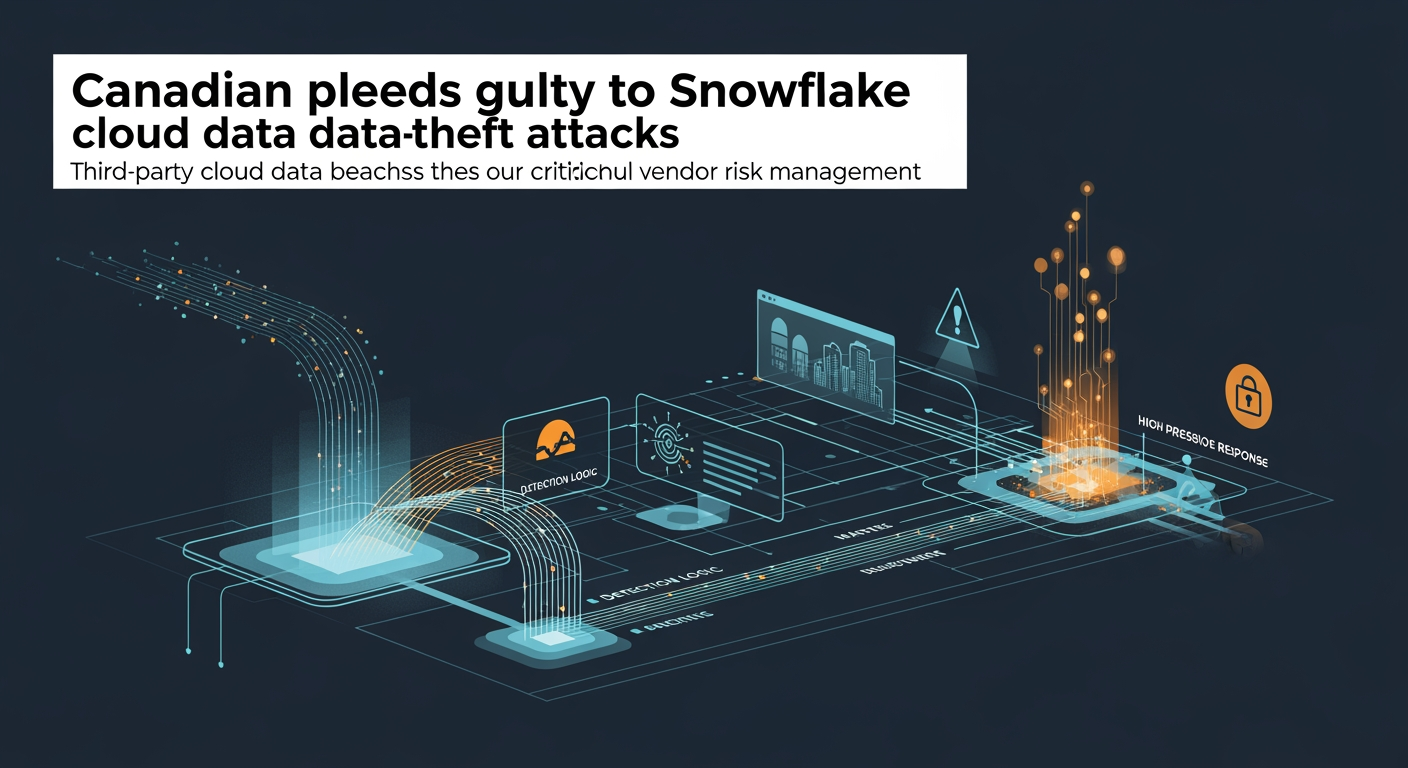
The Snowflake-related data thefts aren’t a Snowflake story. They’re a story about ownership and what happens when nobody is sure who is responsible for securing what.
What Happened
A Canadian individual has pleaded guilty to compromising the Snowflake accounts of at least 165 different organizations. The goal was simple: steal data and try to extort the victims.
The key detail is how the accounts were compromised. This wasn’t a breach of Snowflake’s core platform. The access came from the customer side—likely through stolen credentials, the lack of multi-factor authentication, or other basic identity and access misconfigurations.
What People Will Get Wrong
The easy takeaway is to blame the cloud provider or focus on the attacker. That’s a mistake. The interesting part is not the specific vulnerability, but the pattern.
If 165 organizations were compromised in a similar way, it points to a systemic blind spot, not 165 unique security failures. The headline is about the exploit, but the lesson is about the system around it. This is about a fundamental misunderstanding of shared responsibility in the cloud.
The Practitioner Lens
This is really an ownership problem. When your company moves data into a platform like Snowflake, who is responsible for securing the access to it? Is it the security team? The data engineering team? The application owner?
That sounds simple, but it’s where security programs break. If the data team sets up an account with weak credentials or without MFA, does the security team even have the visibility to catch it before it’s too late?
What I’d want to know is, for any of those 165 companies, who got the first alert? Was it the security team, the vendor, or the extortion email? The answer tells you everything you need to know about their actual control, not the one on the compliance checklist. If nobody owns the asset, nobody owns the risk.
What to Watch Next
The guilty plea closes one chapter, but the attack pattern is now a proven model. This is less about panic and more about verification.
Use this as a prompt. Can you prove who has access to your cloud data platforms? Can you detect anomalous access patterns? If a similar incident happened to you tomorrow, who would be in the room to respond?
The real failure mode is not knowing the answers to those questions before you get the email.
Source: Canadian pleads guilty to Snowflake cloud data-theft attacks