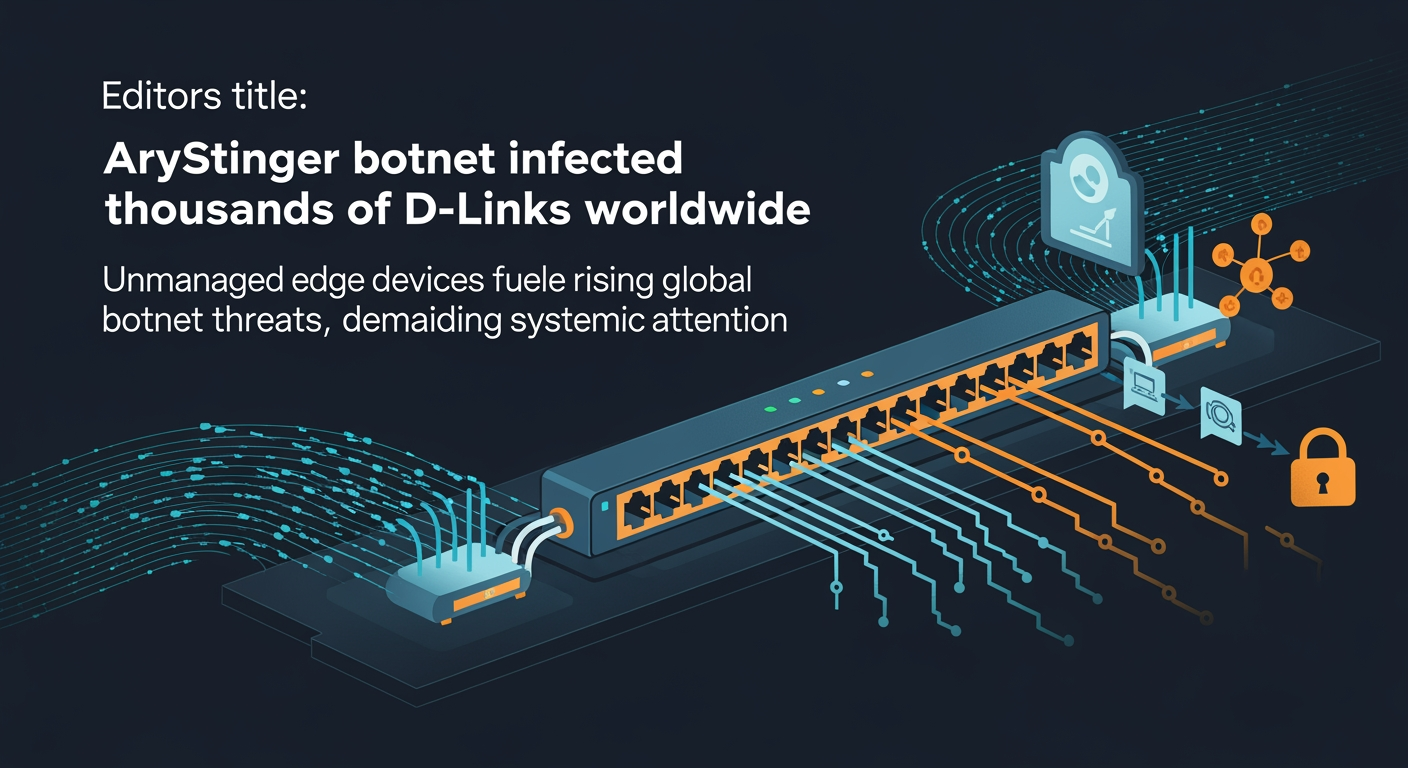
AryStinger botnet infected thousands of D-Link routers worldwide
Unmanaged edge devices fuel rising global botnet threats, demanding systemic attention.
This isn’t a story about a new botnet. It’s a story about ownership.
The headline is about thousands of compromised D-Link routers, but the lesson is about the system that lets them stay compromised.
What happened
A botnet dubbed “AryStinger” has infected over 4,000 D-Link routers by exploiting known vulnerabilities. According to the report, these devices are being used as a proxy network to hide the origin of attacker traffic for things like credential stuffing and other intrusions.
Source: AryStinger botnet infected thousands of D-Link routers worldwide
What people will get wrong
The easy mistake is to dismiss this as a consumer hardware problem. “It’s just old home routers, that’s not our problem.” That’s where the thinking goes wrong.
The real question is how many of those 4,000 routers are used by your employees, contractors, or partners to connect to your network. The story isn’t the specific D-Link model; it’s the unmanaged edge device that you have no visibility into.
This is an ownership problem
When an employee works from home, who owns the security of their router? The answer is usually “nobody,” and that’s the gap attackers drive a truck through.
This isn’t a tooling problem by itself. Your security stack might show a clean VPN connection, but it won’t show you the compromised consumer router that VPN is running through. The dashboard is not the control.
That sounds simple, but it’s where security programs break down. If nobody owns the asset, nobody owns the risk. We can talk about patching and CVEs, but the real failure mode here is the boring, systemic gap of unmanaged hardware sitting one step away from corporate data. The exploit isn’t novel. The vulnerable attack surface is.
What to watch next
Forget the botnet’s name. The question is whether your team can prove what’s connecting to your environment.
Use this story as a prompt. Ask your network and security teams:
- What visibility do we have into the security posture of remote devices connecting to our VPN?
- Can we detect if traffic is originating from a known-bad proxy network, even if it’s coming from a legitimate user’s IP?
- Who is responsible when a home network is the source of a corporate incident?
This is less about panic and more about verification. The next useful signal isn’t in a threat feed; it’s in the answer you get when you ask those questions.